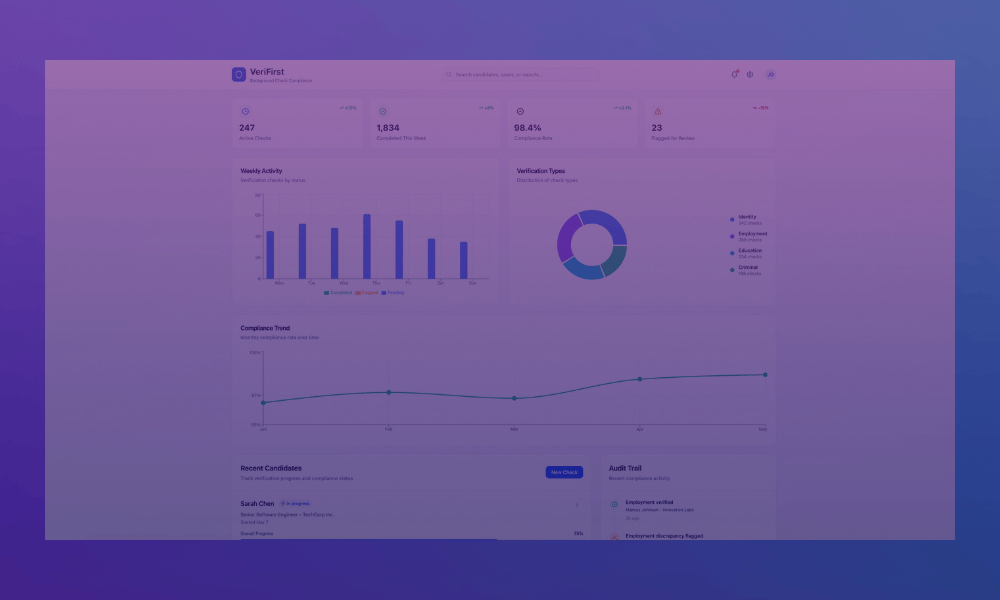
The Complete Guide to Employment Background Checks for Employers.
What Are Employment Background Checks?
Employment background checks help employers verify candidate information and reduce hiring risk. From criminal history searches to employment verification, screening plays an essential role in building a safe and compliant workforce.
- Chapter 1: Introduction
- Chapter 2: What is an Employment Background Check
- Chapter 3: Why Employers Conduct Background Checks
- Chapter 4: Types of Employment Background Checks
- Chapter 5: What Disqualifies Someone in a Background Check
- Chapter 6: Background Check Laws Employers Must Follow
- Chapter 7: How the Employment Background Check Process Works
- Chapter 8: How Long Employment Background Checks Take
- Chapter 9: Best Practices for Employers
- Chapter 10: Choosing an Employment Background Check Provider

Introduction
Employment background checks are an essential part of responsible hiring. Organizations use background screening to verify candidate information, reduce risk, and maintain safe workplaces.
For HR teams and hiring managers, understanding how background checks work can help ensure compliance while improving hiring efficiency. Screening programs can include criminal record searches, employment verification, education verification, drug testing, and other checks depending on the role.
This guide explains everything employers need to know about background screening, including what background checks include, how the process works, compliance requirements, and best practices for building an effective screening program.
What Is an Employment Background Check
An employment background check is a process employers use to verify information provided by job candidates. Screening may include reviewing criminal records, verifying employment history, confirming education credentials, and checking professional licenses.
Background checks help employers make informed hiring decisions while protecting their workplace, employees, and customers. Screening also supports regulatory compliance in industries where safety and trust are critical.
Employers may conduct background checks during pre-employment hiring, for volunteer screening, or periodically for employees working in sensitive roles.
Common Components of Employment Background Checks
Employers often include multiple screening components in an employment background check to verify candidate information and identify potential hiring risks.
| Screening Type | What it Verifies | Why Employers Use It |
|
Identity Verification |
SSN trace and identity confirmation |
Prevent fraud and identity issues |
|
Criminal Record Search |
Criminal convictions and court records |
Identify potential safety or compliance risks |
|
Employment Verification |
Past job titles and employment dates |
Confirm work history accuracy |
|
Education Verification |
Degrees, certifications, & schools attended |
Validate candidate qualifications |
|
Professional License Verification |
Active licenses or certifications |
Ensure regulatory compliance |
|
Motor Vehicle Records |
Driving history and violations |
Evaluate risk for driving roles |
|
Drug Testing |
Presence of controlled substances |
Support workplace safety policies |
The specific screening components included in an employment background check may vary depending on the role, industry regulations, and an organization’s hiring policies.
Related Articles
Why Employers Conduct Background Checks
Employers conduct background checks for several reasons.
-
Workplace safety: Screening helps identify criminal history that may present safety risks.
-
Verification of candidate information: Background checks confirm employment history, education, and credentials.
-
Regulatory compliance: Many industries require screening to meet federal, state, or industry regulations.
-
Protection of company reputation: Hiring qualified and trustworthy employees protects the organization and its customers.
Related Articles
Types of Employment Background Checks
Employers may include several types of screening services in a background check program depending on the role, industry requirements, and company policies. Below are some of the most common types of employment background checks used during the hiring process.
Identity Verification
This process compares personal identifiers such as name, date of birth, Social Security number, and address history against trusted data sources to detect inconsistencies or potential fraud.

Education Verification
Education verification validates degrees, certifications, and educational institutions listed by a candidate to ensure credentials are accurate.

Drug Testing
Many employers include pre-employment drug testing as part of their hiring process to support workplace safety and regulatory compliance.

Criminal Background Checks
Criminal background checks search court records to identify criminal convictions or pending cases. Employers commonly search county, state, or federal records depending on the scope of the screening program.

Professional License Verification
Some positions require professional licenses. Verification confirms that licenses are active, in good standing and may identify disciplinary actions.

Additional Screening Services
Some employers require additional screening depending on the role, industry regulations, or company policy. These may include: Credit history, Civil court records, International background checks, Global watchlists, etc.

Employment Verification
Employment verification confirms a candidate’s previous employers, job titles, and dates of employment. This helps employers verify work history and detect resume inaccuracies.

Motor Vehicle Records (MVR)
Motor vehicle record checks review a candidate’s driving history for roles that involve operating a vehicle or driving as part of the job.
What Disqualifies Someone in a Background Check
Background check results do not automatically disqualify a candidate. Employers should evaluate findings based on the requirements of the job and applicable regulations.
Common findings that may raise concerns include:
-
Serious criminal convictions
-
Falsified employment history
-
Failed drug tests
-
Suspended professional licenses
-
Unsafe driving records
Employers should evaluate results carefully and follow proper compliance procedures when making hiring decisions. To learn more, read: What disqualifies someone in a background check.
Related Articles
Background Check Laws Employers Must Follow
Employers must follow several laws when conducting background checks.
Fair Credit Reporting Act (FCRA)
The FCRA requires employers to provide disclosure and obtain written authorization before conducting a background check through a consumer reporting agency.
If an employer plans to take adverse action based on the report, they must follow the required adverse action process.
Equal Employment Opportunity Commission (EEOC) guidance
Employers must evaluate criminal history in a way that avoids discriminatory hiring practices. The EEOC recommends individualized assessment when considering criminal records.
State and local regulations
Many states and cities have additional rules related to background checks, including ban-the-box laws and limits on reporting periods.
How the Employment Background Check Process Works
The employment background check process typically follows these steps.
- The employer provides disclosure and obtains candidate authorization
- The background screening provider conducts searches and verifications
- Results are compiled into a report
- The employer reviews the findings
- If necessary, the employer follows the adverse action process before making a final decision
How Long Employment Background Checks Take
Turnaround time depends on the type of screening services ordered.
Typical timelines include:
-
Criminal record searches: 1 to 3 business days
-
Employment verification: 2 to 5 business days
-
Education verification: 1 to 3 business days
-
Drug testing: 24 to 72 hours
Delays can occur when courts have limited access to records or when employers take time to respond to verification requests.
Best Practices for Employers
Employers should follow these best practices when implementing background screening.
- Use a consistent screening policy
- Clearly communicate the process to candidates
- Follow FCRA disclosure requirements
- Evaluate results fairly and consistently
- Partner with a compliant background screening provider
Choosing an Background Check Provider
Selecting the right Employment Background Check partner can simplify hiring and help employers maintain compliance.
Organizations should look for a provider that offers:
- Accurate criminal record searches
- Fast turnaround times
- Compliance support and guidance
- Secure candidate consent workflows
- Integration with HR and applicant tracking systems
After evaluating background screening providers, many employers look for a partner that combines compliance expertise, reliable turnaround times, and modern technology integrations.
VeriFirst helps organizations streamline employment screening with a platform designed to simplify hiring workflows while maintaining strict compliance standards. If you’d like to see how the process works in practice, you can schedule a demo or request a background screening quote to explore how VeriFirst supports safer, faster hiring decisions.
Related Articles
The following frequently asked questions address common topics employers search when learning about employment background checks.
Frequently Asked Questions About Employment Background Checks
An employment background check may include several types of screening services used to verify candidate information. Common checks include criminal record searches, employment verification, education verification, professional license verification, drug testing, motor vehicle records, and identity verification. The specific combination of checks typically depends on the role, industry requirements, and the employer’s screening policy.
The timeframe for background checks depends on the type of search and applicable laws. Criminal record searches may review several years of history depending on jurisdiction, while employment and education verifications typically confirm the positions and degrees listed by the candidate. Some states limit how far certain information can be reported under the Fair Credit Reporting Act and state regulations.
Most employment background checks are completed within one to five business days. Criminal record searches are often returned within a few days, while employment and education verifications may take longer depending on how quickly previous employers or schools respond. Delays can occur when courts have limited access to records or when additional verification is required.
A background check does not automatically result in a pass or fail outcome. Employers review screening results and determine whether findings are relevant to the responsibilities of the role. Factors that may raise concerns include serious criminal convictions, falsified employment history, failed drug tests, or suspended professional licenses.
Yes. Under the Fair Credit Reporting Act (FCRA), employers must provide a clear disclosure and obtain written authorization from the candidate before conducting a background check through a screening provider. Employers must also follow specific procedures if they plan to take adverse action based on the report.
Employment background checks in the United States are primarily regulated by the Fair Credit Reporting Act (FCRA) and guidance from the Equal Employment Opportunity Commission (EEOC). In addition, many states and cities have their own regulations related to background checks, including ban-the-box laws and limits on reporting periods.
Identity verification confirms that a candidate is who they claim to be before additional screening begins. This process compares personal identifiers such as name, date of birth, Social Security number, and address history against trusted data sources to detect inconsistencies or potential identity fraud.
Employers may review credit history reports for certain roles that involve financial responsibility, such as accounting or financial management positions. These checks must comply with FCRA requirements, and some states restrict when employers can request credit history as part of the hiring process.
Not all employers require background checks, but many organizations include them as part of their hiring process to verify candidate information and maintain workplace safety. Certain industries, including healthcare, education, transportation, and financial services, may require specific types of screening.
Employers conduct background checks to verify candidate information, reduce hiring risk, and maintain safe workplaces. Screening helps confirm employment history, education credentials, and criminal records while supporting compliance with industry regulations and hiring policies.
Contributors:
Anthony Grower
Topic Specialist
Kelly Brighton
Topic Specialist
Richard Peace
Topic Specialist

Sources:
From Our Blog
Stay up to date with what is new in our industry, learn more about the upcoming products and events.

What Shows Up on a Background Check for Employment?

What Disqualifies Someone in a Background Check? A Guide for Employers